


What Are The Six Types Of Plumbing?
July 24, 2026
April 14, 2026
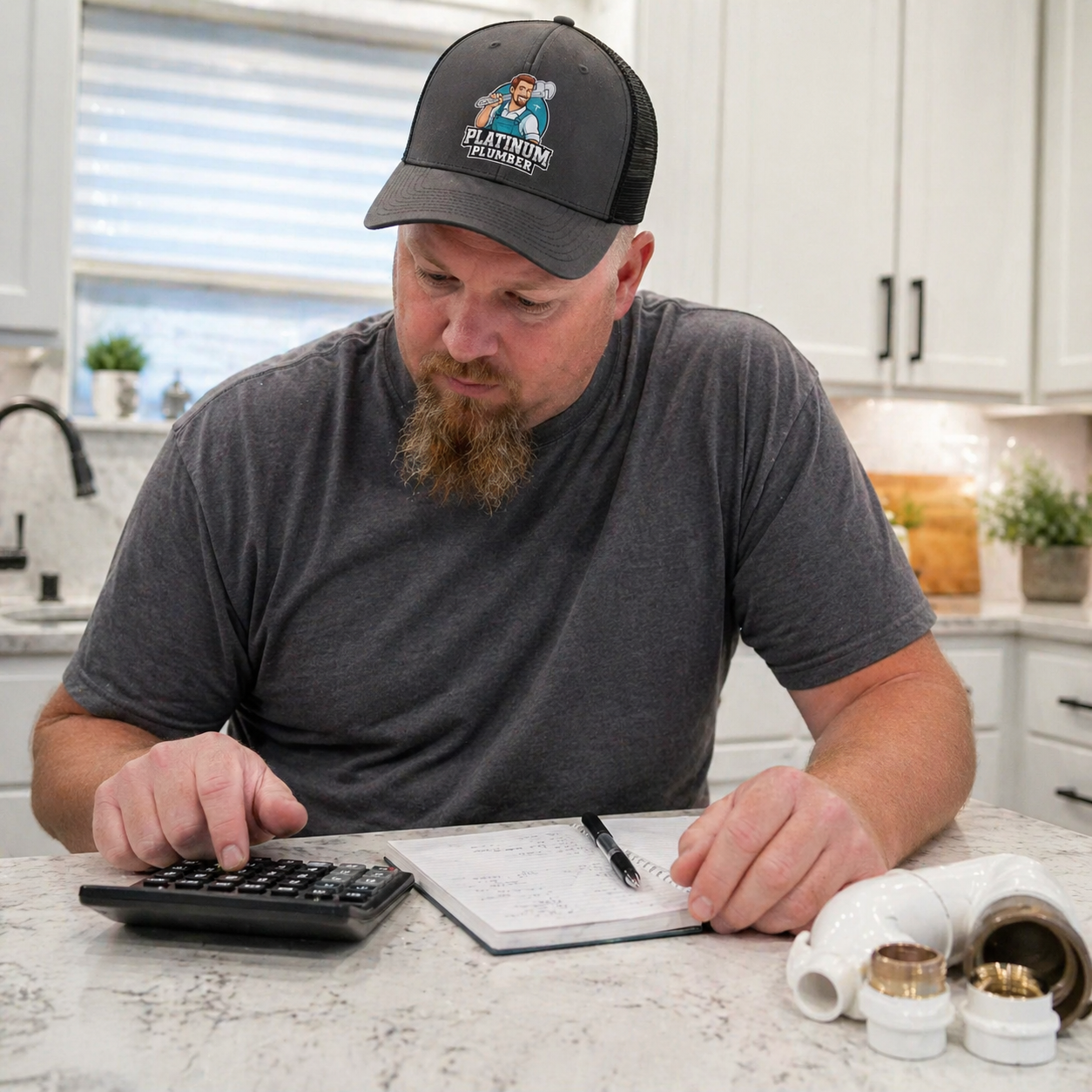
When you see a plumber's hourly rate, it's easy to assume that's what the person doing the work takes home. It's not. A big chunk of that rate goes to keeping the business running, staying legal, and covering costs most homeowners don't think about.
Here's what actually goes into the hourly rate you see on an invoice:
After all that, there's still the actual plumber's wage, benefits, and a small profit margin so the company can reinvest in better equipment and training. That $100 hourly rate might break down to $30 going to the plumber, $50 to overhead, and $20 to keep the doors open long-term.
A licensed master plumber costs more than an apprentice, and for good reason. They've put in years of training, passed state exams, and carry the legal responsibility for the work. You're paying for someone who knows how to diagnose problems fast and fix them right the first time.
Simple jobs like replacing a fill valve in a toilet take less time and fewer tools than repiping a crawl space or diagnosing a slab leak. Some plumbers adjust their rate based on complexity. Others use flat-rate pricing, which we'll cover below.
If you call at 2 a.m. because your water heater burst, you're going to pay more than if you schedule a repair during normal business hours. Emergency plumbing pulls a plumber away from family time, disrupts the normal schedule, and often means working in less-than-ideal conditions.
Weekend and holiday rates are higher for the same reason. Plumbers are people too, and if they're missing their kid's birthday party to fix your sewer line, that costs extra.
Plumbers in big cities tend to charge more than those in smaller towns because overhead is higher. But even within a region, rates vary. In Maryville and the surrounding areas, you'll see a range based on the company's reputation, how long they've been in business, and what kind of warranty or follow-up service they offer.
Not every plumber charges by the hour. Some use flat-rate pricing, especially for common jobs they do all the time.
Flat-rate means you get a single price for the job before work starts. Whether it takes two hours or four, you pay the same amount. This model works well for predictable repairs like replacing a water heater, clearing a drain, or fixing a leaky faucet.
The benefit for you is clarity. You know the cost upfront. The plumber doesn't get paid more for going slow, and you don't get penalized if the job takes longer than expected.
For jobs where the scope isn't clear, hourly billing can be fairer. If a plumber has to chase down a hidden leak or troubleshoot an old system with no diagrams, flat-rate pricing might overshoot because they have to pad the estimate to cover unknowns.
At Platinum Plumber, we believe in transparency either way. We explain what you're paying for and why, whether it's hourly or flat-rate. You can request a free estimate so there are no surprises.
When you hire a plumber, you're not just paying for the time they spend at your house. You're paying for their ability to solve problems you can't, and to do it safely and legally.
A good plumber can walk into your house, listen to your water hammer issue or look at your slow drain, and know within minutes what's causing it. That diagnostic skill comes from years of experience, not a YouTube video.
If a plumber damages your floor or causes a leak that floods your basement, their insurance covers it. If you hire someone without insurance to save $30 an hour, you're on the hook for any damage or injury. Legitimate plumbers carry general liability and workers' comp for a reason.
Plumbing work has to meet local and state codes. A licensed plumber knows those codes and pulls permits when required. That protects your home's value and keeps you from failing an inspection when you sell.
Reputable plumbers stand behind their work. If something goes wrong after the repair, they come back and make it right. That peace of mind is built into the rate.
It's tempting to go with the lowest price, especially on a big job. But in plumbing, cheap often costs more in the long run.
Here's what you risk with a lowball quote:
A fair price from a licensed, insured plumber with good reviews is almost always a better investment than the guy who quotes half as much and disappears after the check clears.
Around Maryville, Knoxville, and the surrounding counties, most reputable residential plumbers charge between $75 and $150 per hour for standard daytime service. Emergency and after-hours rates are typically higher, sometimes 1.5 to 2 times the normal rate.
Trip charges or service call fees are common, usually between $50 and $100. This covers the plumber's time to drive to your house, diagnose the problem, and give you a quote. If you proceed with the repair, the trip charge is often rolled into the total cost.
For bigger jobs like water heater replacements, repiping, or sewer line work, you'll usually get a flat-rate quote based on the scope of work.
Don't just pick a plumber based on price. Ask the right questions so you know what you're getting:
A good plumber will answer all of these without hesitation. If someone dodges the questions or pressures you to decide on the spot, that's a red flag.
Plumbers calculate their hourly rate based on real business costs, not arbitrary numbers. When you hire a licensed, insured professional, you're paying for expertise, legal protection, quality parts, and accountability. Rates in our area typically range from $75 to $150 per hour, with higher fees for emergencies and after-hours work. Flat-rate pricing is common for routine repairs and gives you cost certainty upfront. The cheapest bid usually isn't the best value. Focus on finding a plumber who's transparent about pricing, properly licensed, and willing to stand behind their work. That's what protects your home and your wallet in the long run.


