What Happens During a Whole-House Repipe? A Homeowner Preparation Guide
October 8, 2026
October 8, 2026
If every faucet seems weaker than usual, replacing a showerhead is unlikely to answer the whole question. A whole-home complaint needs a wider look at the incoming supply and the home's plumbing. The useful first step is to describe where and when the change occurs.
Homeowners often use “pressure” to describe any weak flow. A plumber may need to measure pressure and evaluate flow separately to understand what is happening.
Notice whether the change affects hot and cold water, upstairs and downstairs, and several fixtures. If only hot water is affected, mention that. If one faucet behaves differently from all the others, that is also useful.
Describe whether the change was sudden or gradual. A complaint that began after nearby utility work needs a different starting conversation from a problem that appears only when several fixtures run together.
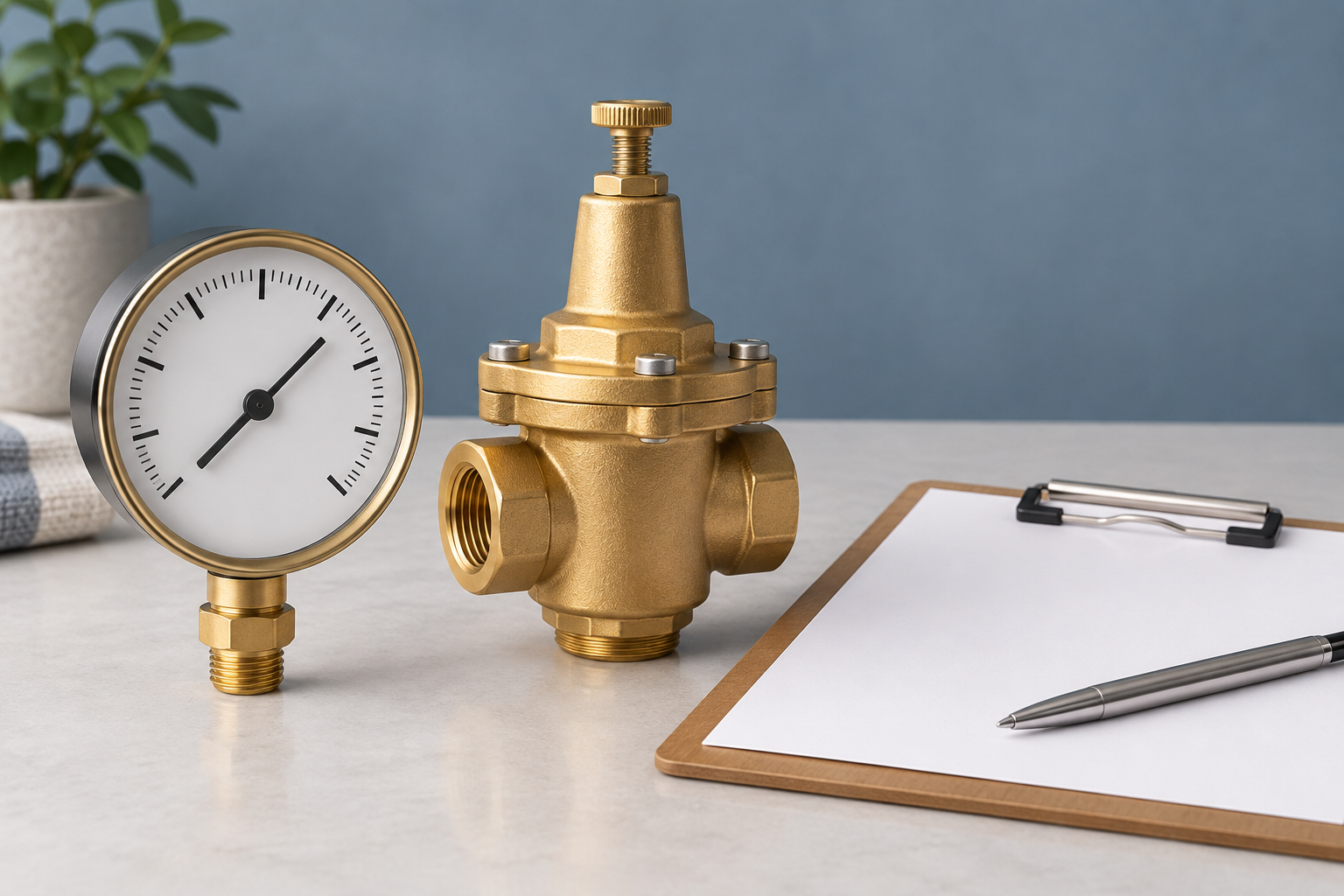
The assessment may consider the available incoming supply, accessible shutoffs, a pressure regulator if present, water-treatment equipment if installed, and the condition of relevant piping. These are possibilities to evaluate, not a list of parts that necessarily need replacement.
If you have a filter or softener, tell the plumber when it was last serviced and whether the problem began after maintenance. Follow that equipment's instructions; do not experiment with unfamiliar valves or controls to chase a pressure change.
Turning a regulator without understanding the system can miss the actual cause. Ask for the measured findings and an explanation of the recommendation. A restriction, supply issue, leak, and equipment problem do not all have the same remedy.
Similarly, pipe age alone does not prove a repipe will fix the complaint. If repiping is proposed, ask which observed condition connects the piping to the symptoms.
If the water provider reports an interruption or supply issue, share that information. It can prevent an assessment from starting with an incomplete picture.
A good recommendation should connect the complaint, the findings, and the proposed work. Ask what will be checked after the repair and what limitation may remain if the cause extends beyond the home's plumbing.
Contact Platinum Plumber for a pressure or flow concern in Maryville or the Knoxville area. Tell us the pattern you have observed so we can discuss the appropriate assessment.