What Happens During a Whole-House Repipe? A Homeowner Preparation Guide
October 8, 2026
October 8, 2026
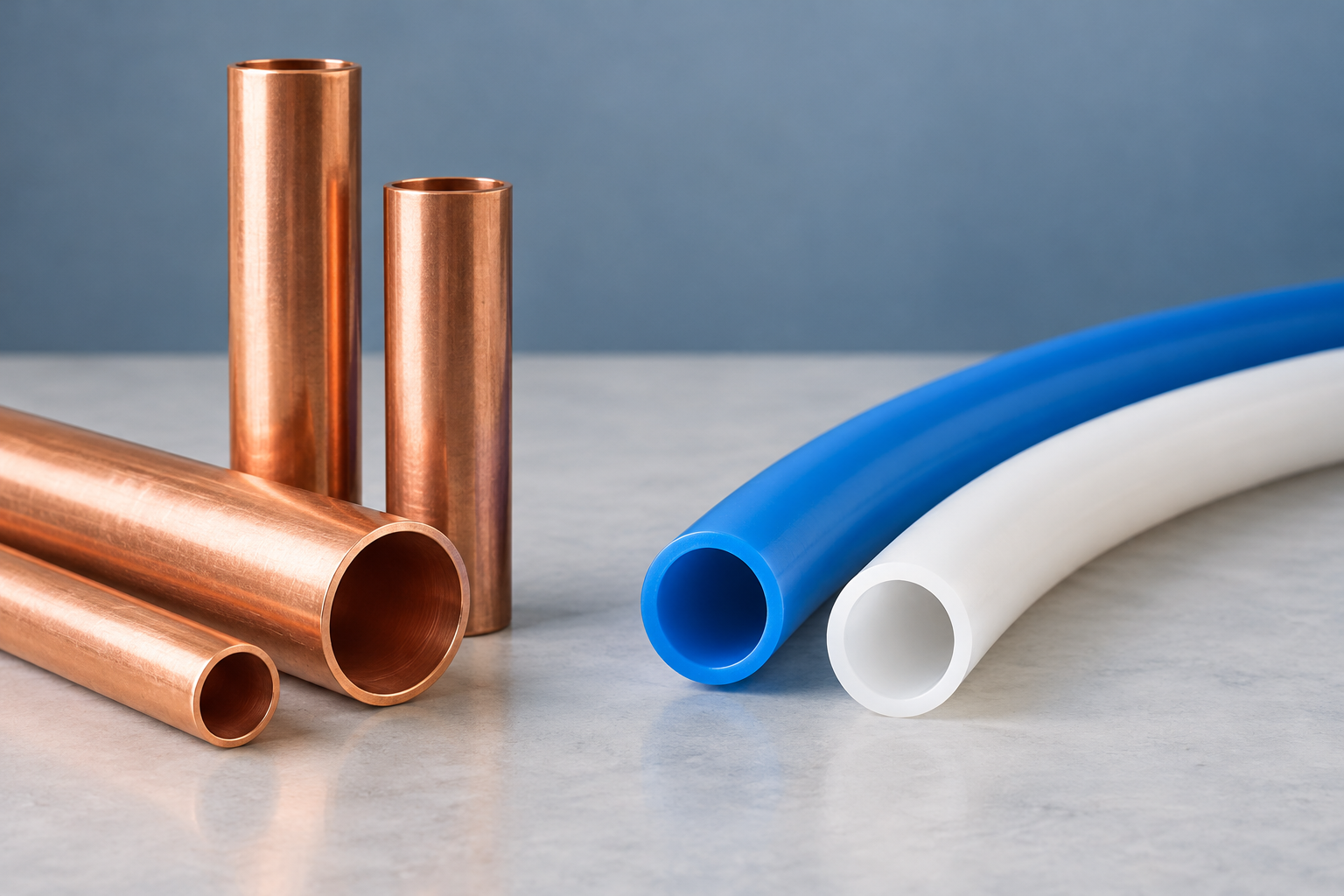
When you are planning a repipe, the material question comes up quickly: PEX or copper? Both deserve a real conversation about the house. A good choice considers the route, connections, water conditions, installation requirements, and how the work will be completed.
Our whole-home repiping service includes discussion of PEX and copper options. Here is what to compare before treating a material name as the whole proposal.
PEX is flexible tubing; copper is commonly installed as rigid pipe with fittings to change direction. Those differences affect how a route can be planned through an existing home. The actual amount of wall or ceiling access depends on the layout and installation, not a blanket promise associated with either material.
Ask the plumber to explain the proposed route, where connections will be made, and which surfaces may need to be opened. Two material quotes should identify whether they follow the same route and include the same restoration.
The tube or pipe is only part of the work. Connections, supports, valves, transitions, protection, and installation practices all matter. Ask which products and connection system are proposed and how the installer will follow their requirements.
Existing water chemistry and evidence of deterioration belong in the assessment. If the current pipe has failed, understanding that failure is more useful than assuming any replacement material will solve every contributing condition.
PEX should not be described as freeze-proof. The Plastics Pipe Institute's freeze-resistance report distinguishes resistance to freeze damage from preventing water from freezing. A frozen supply can stop delivering water regardless of whether the tubing survives.
Ask how vulnerable locations will be addressed and follow the product's exposure and installation limits. Changing pipe material does not replace planning for cold spaces or other environmental conditions.
Compare installed scopes instead of the price of a length of pipe. Labor, routing, fixture reconnections, access, and finish repairs can change the total. A lower estimate that excludes wall repairs is not directly comparable with one that includes them.
Do not assume a particular material guarantees a fixed service life or a higher resale value. Ask for the actual warranty terms and an explanation of the recommendation for your home.
Existing homes often contain changes from past repairs or renovations. A proposal should identify transitions and remaining sections so you know the boundaries of the new work. “Repiped” should not leave you guessing which old pipes are still in service.
Bring previous repair details and any information about your current piping to the estimate conversation. Contact Platinum Plumber to discuss repiping in Maryville or the Knoxville area. Our cost calculator can help start a budget conversation; the final comparison should use the actual installation scope.