What Happens During a Whole-House Repipe? A Homeowner Preparation Guide
October 8, 2026
October 8, 2026

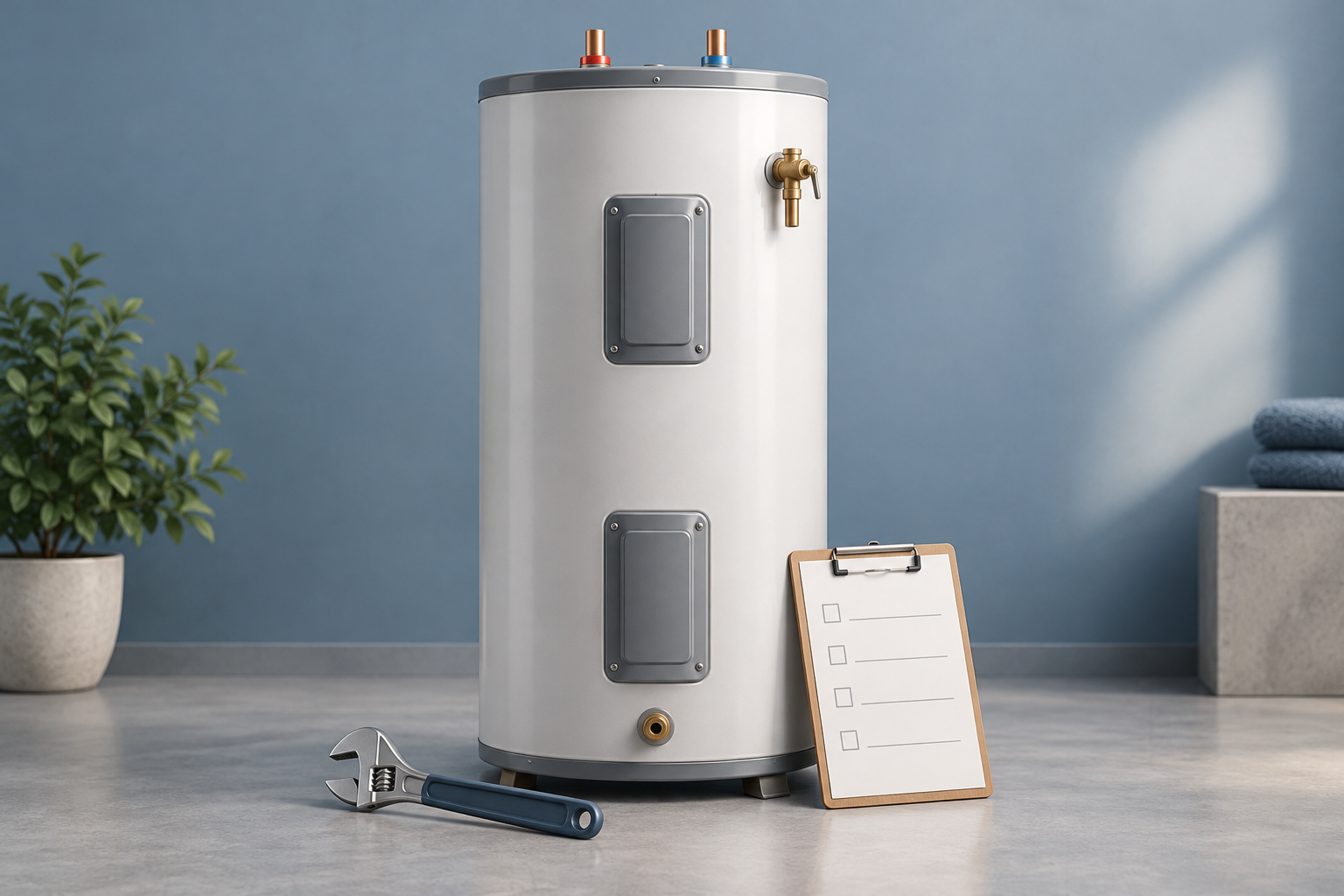
Choosing a new water heater starts with the way your household uses hot water. A compact unit on the wall may look appealing, but it still has to serve the showers, sinks, and appliances you use together. A storage tank also needs to be sized for the job.
For Maryville and Knoxville-area homeowners, the useful comparison is between two complete installations that suit the house. At Platinum Plumber, we want you to understand that difference before you choose equipment.
A storage heater keeps heated water in a tank and reheats the supply as it is used. A tankless heater heats water as it flows through the equipment. Tankless capacity is limited: the unit must deliver the needed flow while raising incoming water to the required temperature.
The Department of Energy's tankless transition guide explains why flow rate and temperature rise both matter. A product's largest advertised flow number is not enough to establish what it will deliver in your installation.
List what runs together on a normal busy morning. Two showers, a washing machine, and a kitchen faucet create a different demand than one shower at a time. Include any planned bathroom addition or change in household size.
For a storage option, discuss usable capacity and recovery. For tankless, discuss delivery at the expected incoming-water temperature and simultaneous demand. You should be able to explain why the proposed model fits your use after the estimate conversation.
A conversion can involve more than hanging a new appliance. The assessment should consider the available fuel or electrical supply, venting where applicable, equipment clearances, condensate handling where required, and maintenance access. The exact requirements come from the selected model and the site.
A suitable tank installation may be worth considering when it meets demand and works well with the existing setup. Tankless may be worth considering when its delivery characteristics, space requirements, and installation scope fit the household. Neither label guarantees a better result in every home.
Ask for any operating-cost comparison to identify the models, local utility assumptions, and expected use. A generic savings percentage cannot tell you the payback for your project.
Not necessarily. Water still has to travel from the heater through the distribution piping. Discuss delivery delay separately from the equipment's ability to heat water.
Compare the current heater's condition and your actual goals with the complete conversion cost. Equipment style alone is not a reason to replace an otherwise suitable system.
Our water-heater service covers repair and installation. Contact Platinum Plumber with your current heater type and the hot-water problem you want to solve. We can discuss an assessment and the scope behind each option.