What Happens During a Whole-House Repipe? A Homeowner Preparation Guide
October 8, 2026
October 8, 2026
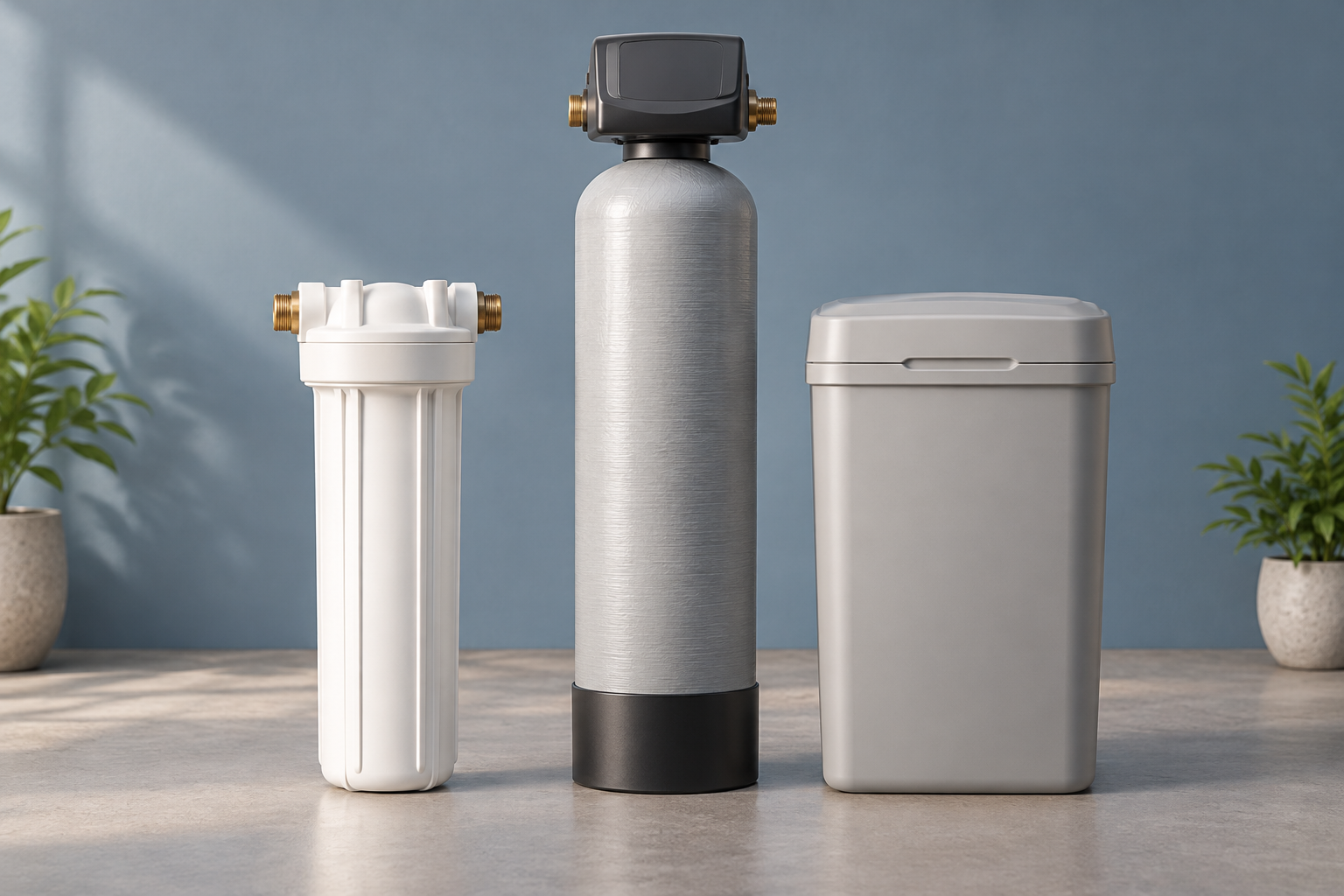
White scale on fixtures, an unwanted taste, and concern about a particular contaminant are different reasons to consider water treatment. Buying one device and expecting it to handle all three can lead to disappointment.
The useful starting point is the problem you want to solve. Platinum Plumber's water-treatment service can help you discuss options for your home without treating every household in the Maryville area as though it has the same water.
A conventional ion-exchange softener reduces hardness minerals such as calcium and magnesium. Its job is different from selecting a filter for a particular contaminant. Softened water should not automatically be described as purified or free of germs.
If scale is your concern, establish the water's hardness and discuss the treatment method. A product marketed as a conditioner may work differently from a conventional softener; ask what it changes in the water and what performance evidence supports that claim.
Filters vary widely. The media, pore characteristics, and treatment process affect what a product can reduce. A filter intended to improve taste is not automatically suitable for every chemical or germ.
The CDC's home-treatment guidance recommends selecting treatment for the substances or organisms of concern. Check the specific product's reduction claims rather than relying on the word “filter.” No single general label answers whether it suits your water.
Decide where you need the benefit. Treating water entering the house and treating water at a particular tap create different installation and maintenance requirements. A household may have more than one goal, but that does not mean it needs every type of equipment.
Discuss available space, service access, drain or electrical needs where applicable, and the flow the system must accommodate. The proposal should explain why the selected arrangement fits the problem and the home.
A clear glass of water does not prove every concern is absent, and an unusual taste does not identify its cause. Avoid choosing equipment from appearance alone.
Possibly, if there are separate treatment goals that call for both. Testing and the proposed equipment's capabilities should support the recommendation.
No. Ask for the selected system's maintenance instructions and who will perform each task. An installation should leave you with a practical plan for keeping it working as intended.
Contact Platinum Plumber with your water source, symptoms, and any test results. We can discuss an assessment and a treatment scope suited to your home. A treatment recommendation should explain what the selected system is designed to address.